
Used Audio Interface: What Insiders Check Before Buying
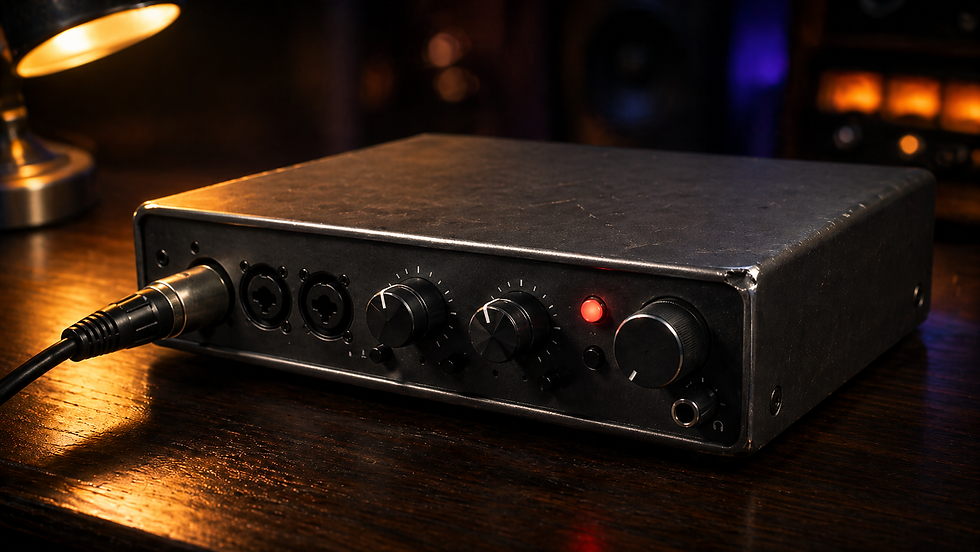
A scratchy gain knob looks like a cosmetic flaw. It isn't — it means the potentiometer is failing, and replacing it costs more than the discount you got.
The knob that tells you everything
Every gain knob on a used audio interface has a story. Turn it slowly from zero to full while something is plugged in. A healthy pot moves smoothly and the signal rises evenly. A dying one crackles, drops out, or jumps in volume. That crackle isn't noise — it's carbon wear inside the control, and it gets worse over time, not better. Most people test whether sound comes out at all. The knob sweep is the test that actually matters.
Phantom power is the hidden dealbreaker
Condenser microphones — the kind used for vocals, acoustic instruments, and podcasting — need 48V phantom power to operate. Most audio interfaces supply it. The problem is that phantom power circuits fail quietly. You won't know yours is broken until you plug in a condenser and get nothing. Before buying any used interface, plug in a condenser mic, flip the phantom power switch, and wait ten seconds. No signal means a dead circuit. This fix is almost never DIY-able on budget gear, and a shop quote will often exceed the resale value of the unit.
The port nobody thinks to test
Every output on the unit — headphone jack, line out, monitor outputs — deserves a quick signal check. Headphone jacks take the most abuse because people yank cables out at an angle hundreds of times. The solder joint behind that jack cracks invisibly. Plug headphones in, wiggle the cable gently, and listen. Any dropout or channel cut-out means a cold joint. One repaired jack is fine. An interface where two outputs behave this way has been used hard and maintained poorly. A-1 Trade & Loan on Commercial Drive sees this pattern regularly on interfaces that otherwise look spotless.
The power supply problem nobody mentions
Bus-powered interfaces — ones that run off USB without a separate brick — have quietly replaced wall-powered units in the used market. That matters because bus power is finicky. Some older bus-powered units pull more current than a laptop USB port can reliably provide, which causes dropouts during recording sessions. If the unit came with a dedicated power supply and that supply is missing, the seller is either careless or knows the original supply was faulty. Always confirm the power situation before you hand over money. A missing brick on a wall-powered unit isn't a small thing to sort out later.
Driver support has an expiry date
Audio interfaces rely on drivers — software that lets your computer talk to the hardware. Manufacturers stop updating drivers for discontinued models. A Focusrite Scarlett from 2014 still works fine on current macOS. A lesser-known brand from the same year might throw a kernel panic on anything newer than Windows 10. Before buying, search the exact model name plus your operating system version. If the manufacturer's support page for that model shows a last update from five years ago, the clock is running. This is the one check that costs you nothing but two minutes, and most buyers skip it entirely.
What the chassis is actually telling you
A dented corner on a metal-bodied interface usually means it was dropped. That's cosmetic. A cracked plastic chassis near a port means stress was applied to the port itself — which means the internal connector may have shifted off its board mount. Push gently on each USB or Thunderbolt port. It should feel solid, not springy. A port that moves even slightly is a connection waiting to fail mid-session.
Before you buy, run the gain knob sweep, flip the phantom power switch with a condenser mic attached, test every output, and confirm the power supply is present. Then spend two minutes on the manufacturer's driver page for your OS. Those five checks take under ten minutes total and will catch every problem that actually costs money — check sold listings on Reverb for the same model to confirm you're not overpaying for a unit with issues the seller never mentioned.


Comments