

How to spot fret wear fast when buying a used guitar
Want to avoid a guitar that needs a fret job after one week?
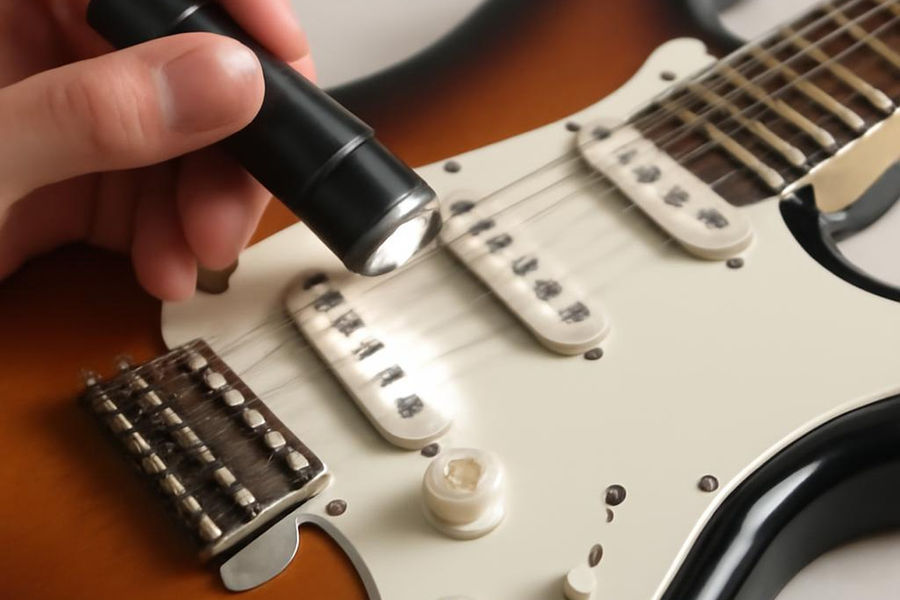
You can spot fret wear fast if you know where to look. These quick checks save time and money. They also help you negotiate better.
What is fret wear and why it matters?
Fret wear is when the metal frets get grooves or flat spots from strings. Deep wear makes buzzing, dead notes, and tuning trouble. A full fret level and crown can cost more than a cheap guitar.
What tools do you need for a quick check?
You need only a few simple tools you might already have. A bright light helps. A soft cloth keeps the neck clean. If you have a small straightedge, bring it, but it's not required.
How to inspect frets in 90 seconds
Look down the neck from the headstock toward the body. Tilt the guitar so the light skims the fret tops. You are hunting for dips, flat shiny spots, and uneven heights.
Check each fret under a raking light for dents, grooves, or flat shiny areas. Run a fingertip gently along the fret crown to feel for ridges or deep cuts. Press each string at the 12th fret and listen for buzzing or dead sound. Play the same note at open and at 12th fret to compare tone and sustain. Look for uneven fret heights by sighting along the neck edge.
How deep is too deep: quick rules of thumb
If you see grooves that trap a fingernail, that is serious. Small pits that don't catch a nail are common and fixable by dressing a crown. If the fret looks flat across the top, plan for a refret or a partial refret.
How to test frets by playing (micro-moment)
You meet a seller in person with the guitar. You tune it and play a few open chords. Then you play single notes up and down the neck, especially around the 3rd to 15th frets. Notice any dead, choked, or buzzy notes and where they happen.
Can you fix fret wear yourself or is it a pro job?
Minor wear can be dressed and crowned at home with files and polishing tools if you have steady hands. Major divots, deep flats, or very low frets usually need a pro refret. Ask for a repair quote before you buy and factor that into price.
What to ask the seller before you buy
Ask how long they owned the guitar and what string gauge they use. Old heavy strings or metal picks can speed wear. Ask if the guitar has had previous fret work. If the seller already paid for a refret, ask for receipts or photos.
Red flags that mean walk away or bargain hard
If frets are visibly scalloped, patchy, or show shiny channels on several strings, expect a bill. Unlevel frets that cause notes to choke when you bend are a big red flag. If the neck has uneven bowing and the seller refuses a setup, that is a money pit.
How to use fret condition to negotiate price
Estimate repair cost then subtract from your offer. A pro partial refret or fret dress can be a few hundred dollars. A full refret on a higher-end neck is more. Be calm, point out the exact frets with photos, and offer a fair number based on repair needs.
Quick checklist to take with you
Bring this checklist when you inspect a used guitar:
Tune the guitar and play open strings for tone.
Use a bright light to inspect each fret top.
Run your fingertip along frets to feel divots.
Play notes at 3rd, 7th, 12th, and upper frets for buzzing.
Ask the seller about string gauge and past repairs.
Take a photo of any bad frets for price talks.
Get a quick repair estimate before buying.
A straight neck and even frets matter more than shiny hardware — price the setup before you fall for the look.
Today’s takeaway: A 90-second fret check with a light and a few notes will tell you if a used guitar is a bargain or a repair bill waiting.


Comments