

Do diamonds or gemstones add value when selling gold jewelry?
Ever handed over a ring and assumed the stones would boost the offer? That mistake costs people time and money.
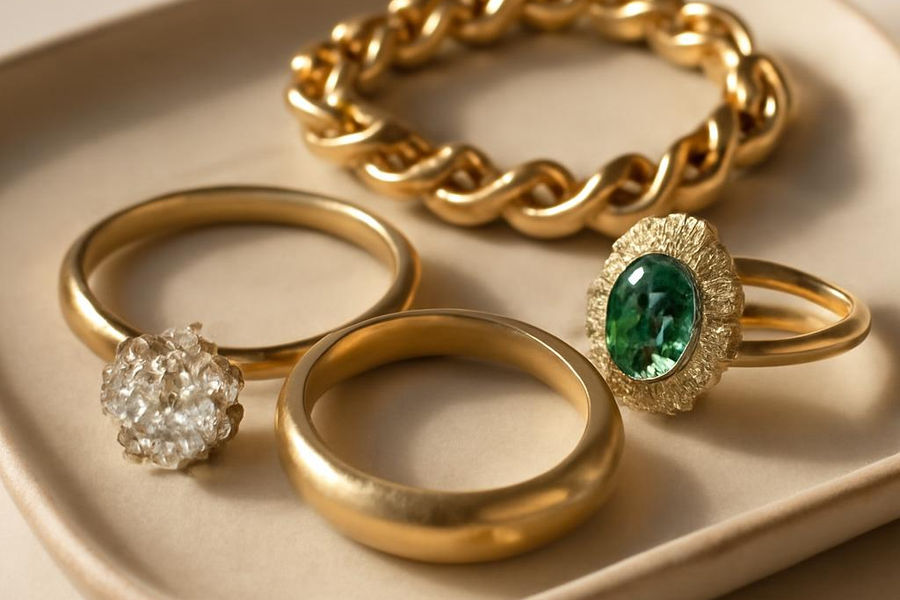
Low risk: Small accent stones, thin settings
If the gems are tiny and only hold decorative value, they rarely move the price much. Buyers in this tier weigh the melted gold value first. Small chips, lab-created stones, or poorly set accents add little beyond curiosity value.
What to check: weight of the piece, karat mark (stamped like 10K/14K/18K), and fast visual damage. If claws are worn or stones wobble, expect lower offers.
Medium risk: Noticeable gemstones, secure settings
When stones are larger or well set, they can help—but not always by the full retail amount. A sapphire, emerald, or small diamond may be worth something when:
the stone is real (natural) and in good condition. the setting holds it securely. the overall piece is in wearable condition.
Negotiation levers to use when you sell:
Bring the ring clean and free of dust to show the stone clearly
Point out any hallmarks and the karat stamp for gold
If you have a receipt or appraisal, bring it along
Show if the setting is solid and not repaired or poorly soldered
Ask if the buyer separates gem value from metal value
Be willing to leave a small margin for the buyer to test the stone
Compare offers from two places before deciding
Micro-moment: You meet a buyer and hand over the ring for inspection. They lift it to the light, tap the stone, and peer through a loupe. You stand ready with a small cloth and the original receipt; clarity and calm help the price.
If the stone is lab-grown, many buyers treat it like costume jewelry. Natural stones with minor flaws still can move the price, but expect deductions for clarity and cut.
High risk: Big diamonds or rare gems in top condition
Large, high-quality stones change the game. A natural diamond over a certain size, or a top-color, top-clarity gem, can be worth far more than the gold itself. But buyers will be cautious.
You should prepare proof. Lab reports, original appraisals, or certification papers matter. Without documentation, offers will often be conservative to cover testing time and resale risk.
How to handle a big stone:
Don’t accept the first quick offer. Big stones need testing. Ask if the buyer will pay separately for the stone and the gold. Be ready for an independent test request; that can shift the price.
Quick tests and common pitfalls
A buyer will often test the metal first. That gives a base number. Then they look at the stones. Many shops only pay full retail for gems when they can resell them quickly, or when they buy to order.
Common pitfalls you can avoid:
Assuming lab-grown = worthless. It can still have resale value, just less than natural. Thinking a pretty stone equals big value. Cut and clarity matter. Not cleaning the piece before you present it. Dirt hides color and flaws.
How to get the best practical price
Start with realistic expectations. If the gold weight is the main value, get a scale reading and know the karat. If the stone is the main value, bring paperwork and be patient.
Ask the buyer how they price stones. Some separate metal and gem value, some give a blended offer. If you want a fair split, insist on line-item clarity: what portion is gold, what portion is gem value.
Keep records of offers. If you sell elsewhere, a prior offer can help nudge negotiations. For big stones, get an independent appraisal or certification first. It costs money but can raise the sale price enough to cover the fee.
If the shop won’t show the scale and test, you don’t have enough information to accept the offer.
Today’s takeaway: Clean the piece, bring paperwork for any big stone, and treat gems as a separate value stream from the gold.


Comments