
The Paperwork That Proves a Used Device Is Really Yours
He set the MacBook on the glass and slid it forward. The hinge was bent.

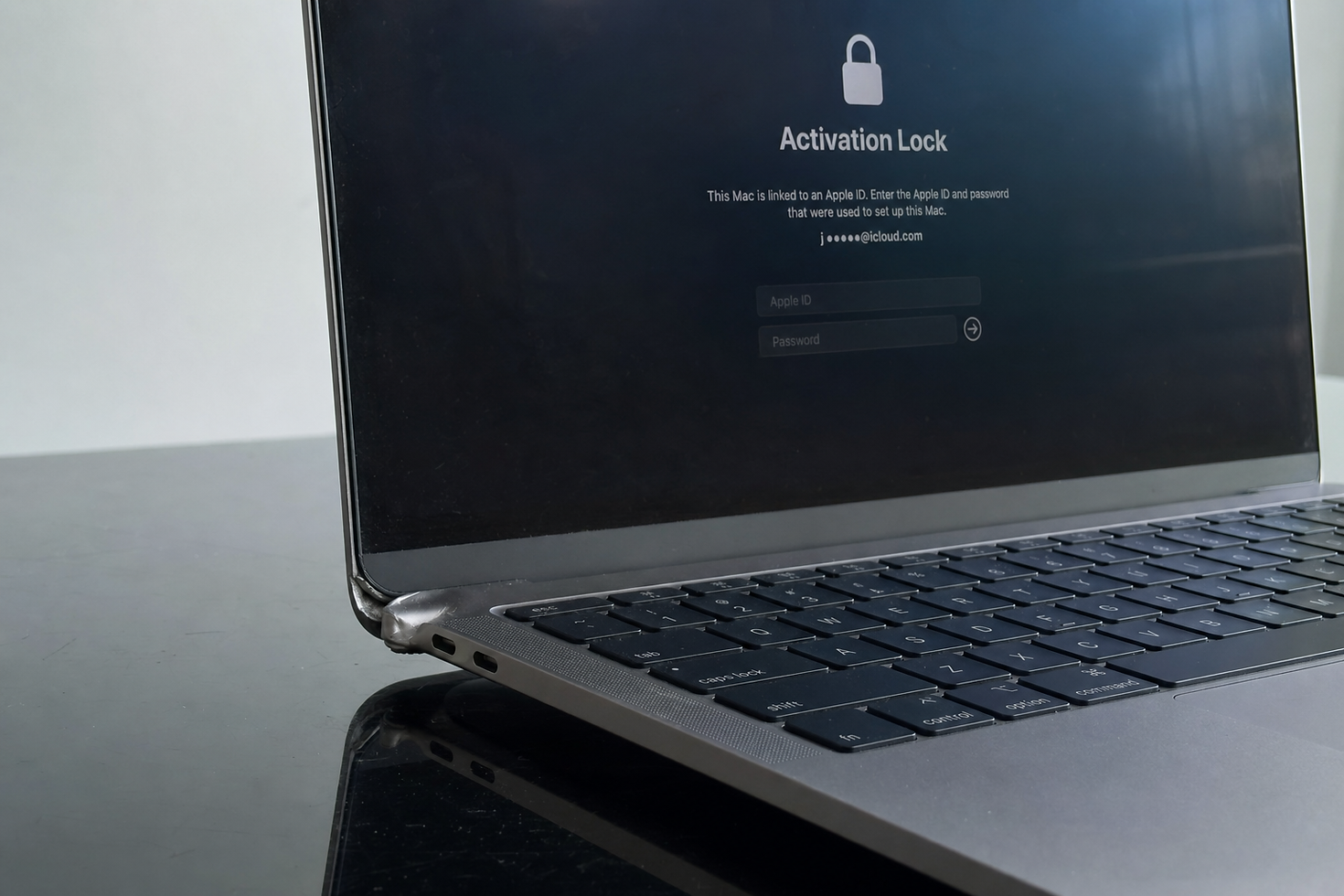
The laptop landed with that particular thunk of dented aluminum — not cracked, just caught a corner somewhere. The hinge angle said it had lived in a bag for a while, bouncing. But the hinge was not what stopped things cold. What stopped things was the login screen, still glowing, still locked to an Apple ID that was not his name.
Why the locked screen changes everything
Activation Lock on a MacBook — or iPhone, or iPad — means the device is tethered to someone else's Apple account. Apple built this as a theft deterrent, and it works. A laptop behind someone else's lock is not a laptop you can use. It is a very expensive paperweight with a good keyboard. Buying one secondhand, without proof that the seller owns it and can release it, is one of the most common ways people get burned on used electronics.
What proof actually looks like
The man at the glass did not have a receipt. He had a story. Stories are not proof. What works instead is a pawn ticket — a formal transaction record that ties a specific serial number to a specific person on a specific date, with redemption terms attached. When a shop like A-1 Trade & Loan on Commercial Drive writes one of those tickets, the serial number goes into a system that police can check. The item, the owner, and the date are locked together in writing.
That document does two things at once. It protects the shop from buying stolen goods. And it protects you, the buyer, from purchasing something that will get flagged or locked six weeks later.
The gap a missing ticket creates
Buy a used MacBook from a private seller and you get whatever they hand you. Sometimes that is a receipt. More often it is nothing. If the device later shows up as stolen — reported after the sale, which happens — you lose the device and the money. No ticket, no record, no recourse. The person who sold it is gone. The MacBook goes back to whoever filed the report.
A pawn ticket shortcircuits this because the shop has already done the identity check. The seller showed government ID. The serial was logged. If something was wrong with that item's history, it was caught before it ever reached the sales floor.
What to ask before you hand over cash
When buying secondhand electronics anywhere — a shop, a marketplace, a garage sale — ask for the serial number before you pay. Run it through Apple's activation lock checker, or the IMEI check tool if it is a phone. These are free tools online. A clean serial means the device is not tied to another account and has not been flagged as stolen. A locked or flagged serial means walk away, no matter how good the price looks.
If you are buying from a pawn shop, ask whether the item came in on a ticket and whether the loan period has passed. A device sold off the floor of a licensed pawn shop has already cleared that check. The ticket exists. The ID was verified. The serial was logged.
The document nobody thinks to keep
Pawnshop paperwork feels like a formality until you need it. But the ticket is also your receipt if anything goes wrong post-purchase. It shows the chain — who owned it, when, and under what terms. Without it, a dispute is your word against theirs with no paper between you.
Before you need to look for it, take thirty seconds right now to decide where you keep important shop slips — a drawer, a photo in your phone, an envelope. The people who lose those documents are the ones who later can not prove they bought the item legitimately, which turns a clean purchase into a frustrating mess.


Comments