
Your Matched Set Isn't Worth More Because It Matches
Most people believe a matched set — say, a gold necklace and bracelet sold together — commands a premium because the pieces belong together. In reality, gold is priced by the gram, and a matched set gets evaluated as two separate pieces of metal, not one collector's prize.

The matching myth, demolished
The logic seems reasonable. You bought the necklace and bracelet as a set, they share the same design, and parting with one feels wrong. Most people assume that togetherness adds value the way it does with fine china or vintage furniture. It does not. Gold buyers work from weight and purity, and neither of those numbers changes because two pieces share a pattern. A 10-gram 18-karat bracelet is worth exactly what it weighs in gold, matched set or not.
What actually gets measured
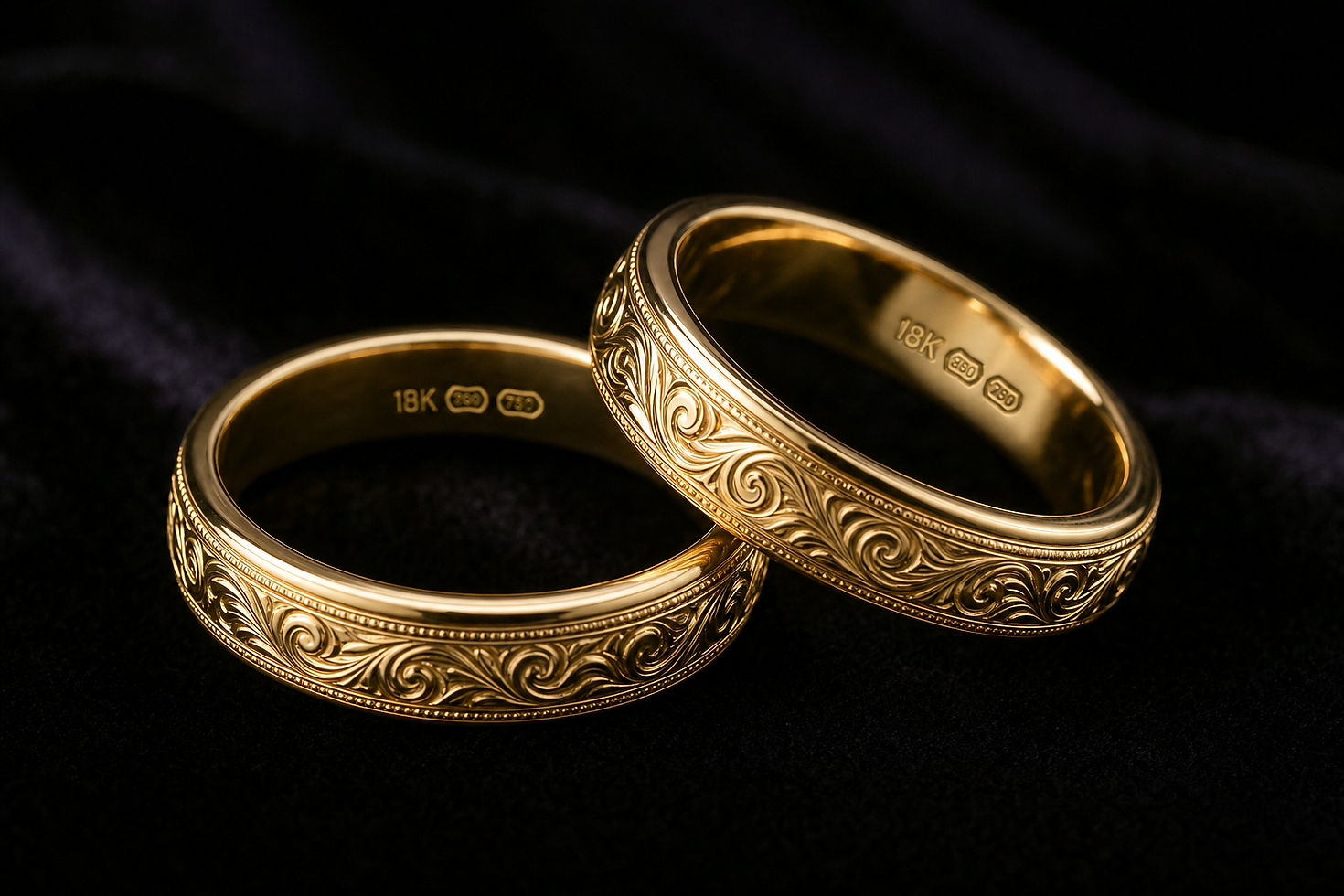
Take an engraved wedding band paired with a matching men's band — same yellow gold, same milgrain edge, same jeweler's mark. Each band gets weighed independently. Each gets tested for karat — 14k, 18k, or 24k tells you what percentage is pure gold. The engraving adds charm but shaves nothing off the weight calculation, and the matching pattern adds zero to the purity reading. The truth is, the only time two pieces earn more together is when a recognizable luxury brand can be authenticated and recent sold comps back it up. A plain matched set from a local jeweler from 1987 is just two pieces of gold.
Why people get this so wrong
The set-premium belief comes from retail logic. When a jeweler sells a matched suite — necklace, bracelet, earrings — the set price is always higher than the sum of the individual parts. Retail marks up for design, exclusivity, and the satisfying feeling of a complete look. Most people carry that pricing logic into the resale world without realizing it runs in reverse. At A-1 Trade & Loan on Commercial Drive, a heavy plain bracelet from a standalone sale often outperforms half of a dainty matched set, simply because more gold is more gold.
The piece that looks lesser often wins
Actually, a plain gold bracelet with no matching partner frequently beats a delicate set piece in value. Here is why: hollow construction is common in matched sets. Designers keep sets lightweight and wearable, which means lower gold content per centimeter of visible metal. A chunky mismatched chain with no aesthetic sibling can carry twice the gram weight of a prettier set piece. In reality, the bracelet nobody wants to separate from its partner might be the lightest thing on the scale.
Stones complicate the picture further
If your matched set includes diamonds or colored stones, most buyers deduct the stone weight from the gross before calculating gold value. The stones get assessed separately, and small accent stones often contribute almost nothing to the final number. Most people assume the diamonds nestled along a matched gold collar add straight to the value. Actually, if those stones are small, included, or hard to resell individually, they can be treated as near-zero in the gold calculation.
What to do instead
Stop thinking of the set as one object and start thinking of it as two or three separate gold items that happen to look alike. The piece with the most gram weight is your strongest asset, regardless of whether it has a partner. Before you bring anything in, weigh each piece on a kitchen scale — even a rough gram count tells you which piece is working hardest for you. Then pull up a live gold spot price, multiply your gram weight by the current price per gram, and apply the karat fraction: 14k is roughly 58% pure gold, 18k is 75%. That quick math gives you a realistic floor before you walk through any door, and it will almost certainly surprise you — not because the set is worth more, but because one specific piece in it is doing most of the heavy lifting.


Comments