

What to check before buying a used amp: a quick, real counter guide
You hand over $240 cash for a vintage combo at a parking-lot meet. the person selling says it sounds great, but the tremolo is noisy. You plug in later at home and hear a hum under every note. That $240 deal just turned into a $120 fix and a $40 resale loss. Use this printed checklist at the counter: look, listen, and test before you pay.
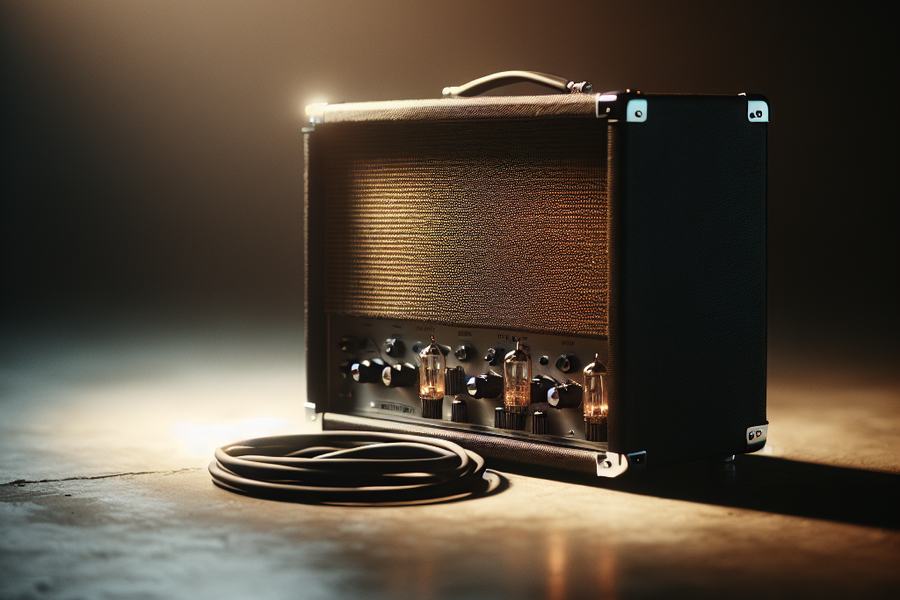
What to look at first
**Check the speaker**. Look for rips or soft spots in the cone. Press the cone gently. If it caves, plan for a $60–$180 speaker replacement. Open the back panel if possible. A loose cone or frame bushing is an easy repair to spot.
What to listen for when you plug in
**Listen for hum, crackle, and rattles**. Play clean and dirty. If a single knob makes crackle, the pot likely needs cleaning or replacing ($15–$45). If the amp hums even with no instrument, note if the hum drops when you touch the chassis. That hints at a grounding issue.
How to test electronics in 90 seconds
**Test basic functions quickly**. Turn off effects. Set EQ flat. Play a steady note at low volume, then at performance volume. Watch for these failures:
No sound from one speaker
Volume jumps when you move the amp
Weird noises only on certain channels
Footswitch jack that wobbles or doesn't change channels
Missing power cord or wrong voltage label
Lessee repairs obvious like taped jacks or multiple loose knobs
Signs of water damage (rust, salt lines, dark stains)
A quick price reality check
**Know typical used prices**. Expect a small practice amp to be $60–$120. Expect a mid-range tube combo to be $420–$900. Expect tube replacement cost of $60–$180 and tube calibration or tech time of $50–$120. If the asking price leaves you less than a $100 margin after repairs, pass. Micro-moment: You meet a seller in a cafe lot. The amp powers on and a cheap clip plays. the person selling leaves before testing. You plug in and hear intermittent dropout after five minutes. The amp has a loose internal jack that only shows after heat builds. If you can't test for five minutes, walk away.
How to know it's safe to buy
**Check for proof and condition**. Ask about service history and original power rating. Look for a clean chassis and solid handles. Confirm the amp's voltage matches your outlet. Ask if tubes are original or new. If the amp was recently listed at $780 and now $420, ask why.
Final quick checklist to bring
**Bring cash, a cable, and a loud friend.** Bring a small screwdriver to open panels legally. Bring $25 spare for a quick pot cleaner if you plan to buy. A-1 Trade & Loan on Commercial Drive tests and prices everything on the spot. What this means for you: If the expected repair costs more than 25 percent of the sale price, walk.


Comments