

What to check before buying a used amp: a quick pawnshop brief
- Jan 24
- 3 min read
Have you ever bought an amp that looked fine but sounded off? One quick check can save you hours of repair and a lot of money.
What’s going on
Used amps vary a lot. Some were babied. Some were on the road. You need fast checks that tell you if the amp is worth it. Keep your eyes, ears, and hands on the job.
Why it matters
Amps fail in ways you can’t see. A crackling channel, a weak output, or a hidden repair bill can make a bargain into a headache. Checking now keeps you in control of the price and the repair risk.
What to check — quick walk-through
Start with a basic visual and power check. Then move to sound and load tests. Spend 10–15 minutes total if you can. Here are the must-see points:
Power on and warm-up: does it start clean and stay on without odd noises?
Cosmetic and chassis: look for dents, rust, or mismatched screws that hint at rough treatment or past repairs
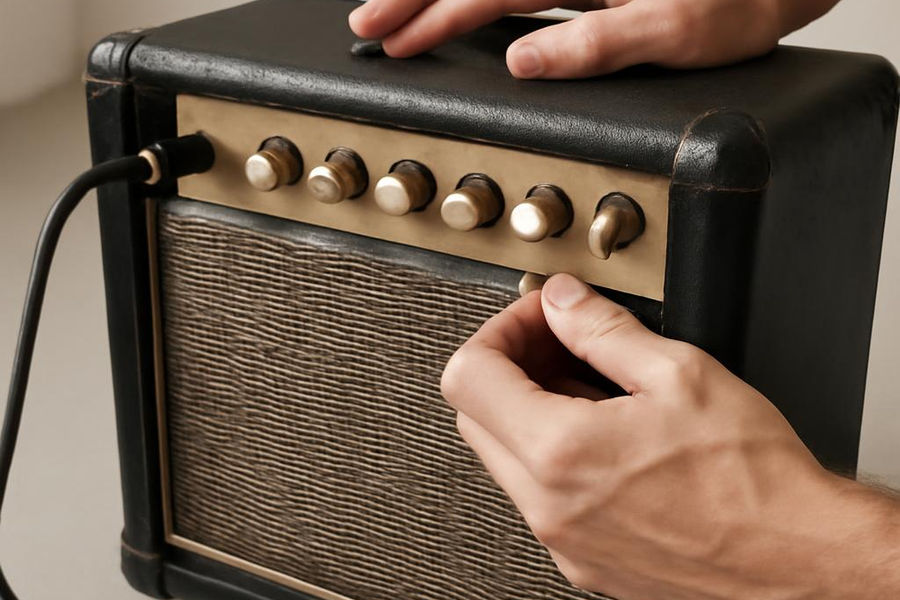
Knobs, switches and jacks: everything should move smoothly and not wobble or crackle when touched
Speaker and output check: try a known-good cable and speaker or cab; listen for hum, buzz, or weak output
Tone and channels: switch channels and set all knobs at noon; listen for even volume and no sudden jumps or dropouts
Heat and smell: a burnt smell or hot spots on the case are red flags for bad components
Tubes or pedals (if applicable): if it’s tube-driven, inspect tubes for white spots, odd glow, or slow warm-up
Micro-moment
You meet a seller at a shop. You plug your guitar into the amp with your own cable. You play a few chords, bump the gain and flip channels. If the amp coughs, crackles, or drops out when you move a cable or nudge a knob, that is the moment to negotiate lower or walk away.
Red flags and what to do about them
Small issues can be cheap to fix. Large ones drain your wallet. Here’s how to judge repair risk.
Minor: scratchy pots (can be cleaned), loose jack (solder fix), light dent with no function loss. Moderate: intermittent channel switching, weak output on one channel, loose or faulty bias on tube amps. Major: loud humming at low volume, burning smell, blown transformer sound, blown speaker cone.
If you find minor issues, ask for a small discount or a brief return window. For moderate problems, factor a repair estimate into your offer and get a clear written price. For major problems, pass unless the price is very low and you have a known tech to fix it.
Simple tests to bring with you
Bring a short kit to make testing fast and clean. You don’t need a full rig.
One good instrument cable. A small speaker cabinet or powered monitor (to confirm output). A simple pedal to check effects loop and input response. A flashlight to check inside tubes or vents. Your phone to record a short clip of the amp playing.
Negotiation levers you can use
Use what you found. Surface wear is worth little. Electrical or sound issues are worth a lot. Say what you will fix and why you lowered your offer. If the seller won’t budge, walk; there will be another amp.
Bottom line
Buying a used amp is a mix of the eye, the ear, and common sense. A quick visual, a plug-in test, and a short load check will tell you most of what you need. Know what you’ll accept and what you won’t, and don’t be afraid to leave an amp on the shelf.
If it won’t stay in tune through a short play test, assume there’s a reason and negotiate from that risk.
Today’s takeaway: Test it with your own cable and speaker, listen closely for weird noises, and only buy if the sound and condition match the price.


Comments