

What paperwork helps when selling higher-end jewelry or watches?
Myth: Only the piece matters, paperwork is optional
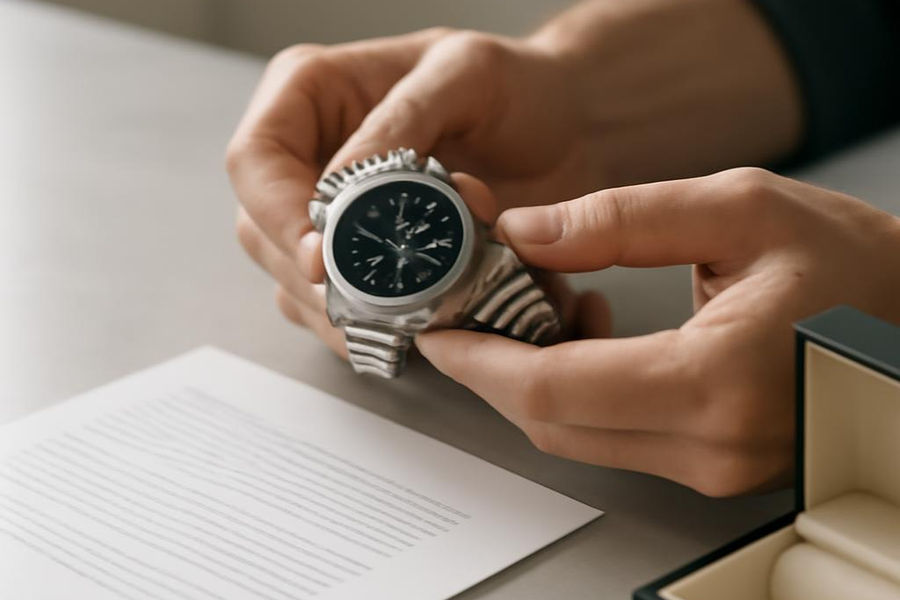
Ask yourself: have you ever handed over a watch with no papers and wondered why offers were low? **Many buyers treat pieces without paperwork as higher risk.** That hurts the price.
Reality: Certificates and boxes move the needle
A full set — box, papers, and receipts — **shows the item’s history**. That makes buyers more confident. You usually get a better offer when you can prove authenticity and original purchase details.
Myth: Appraisals are useless to pawn shops
Some sellers think an appraisal from years ago is meaningless. That is not always true. An old appraisal can still be a useful clue about metal and gem details if it lists specifics.
Reality: Recent, detailed appraisals help most
A current appraisal, done by a reputable appraiser, **matters more than an old one**. It should state metal weight, karat (purity), gem carat sizes, and any treatments. Those specifics let a buyer or pawnbroker check replacement or refinishing costs quickly.
Myth: A photo of the receipt is enough
A quick phone photo may look like proof. But photos can be cropped or unclear. **Verifiable receipts are stronger.**
Reality: Original receipts or bank records are best
An original receipt with the seller name, date, and serial numbers is ideal. If the original is gone, a bank or credit card record showing the purchase can help. **These records tie the item to a sale and speed up offers.**
Myth: Serial numbers and hallmarks don’t matter to buyers
People sometimes assume those tiny marks are just for manufacturers. That is a mistake. **Serials and hallmarks are critical ID markers.**
Reality: Serial numbers, hallmarks, and service history increase trust
A clear serial number on a watch and stamped metal marks on jewelry let a buyer confirm model and metal purity. A service record for a watch proves it ran and was cared for. **That can reduce buyer risk and improve the price.**
Myth: You must bring everything to the counter; paperwork is overkill
It’s easy to believe you only need the piece and hope for the best. Some sellers bring minimal info and leave money on the table.
Reality: Pack a simple file and save time
Gather what matters: box, papers, receipts, appraisal, service history, and any replacement invoices. Even photos showing the piece on you can help prove it's yours. **A neat file speeds the process and often raises the offer.**
Micro-moment
You meet a buyer who asks for the watch box and papers. You shrug and say you lost them. The buyer lowers the offer. If you had kept the small service receipt in your wallet, you would have avoided the cut in price.
Fast check before you pay
Find the original receipt or a card/statement showing the purchase date and amount
Locate the box and manufacturer papers with serial or model numbers
Get a recent appraisal that lists metal weight, karat, and gem sizes
Gather service records for watches (dates and work done)
Take clear photos of hallmarks and serial numbers before you go
Note the original seller or store name if possible
Keep any warranty cards or authenticity certificates handy
If the shop won’t show the scale and test, you don’t have enough information to accept the offer.
Today’s takeaway: Bring the papers and you often get the price you deserve.


Comments