

What to check before buying a used guitar pedal
Quick test: one small error costs hours
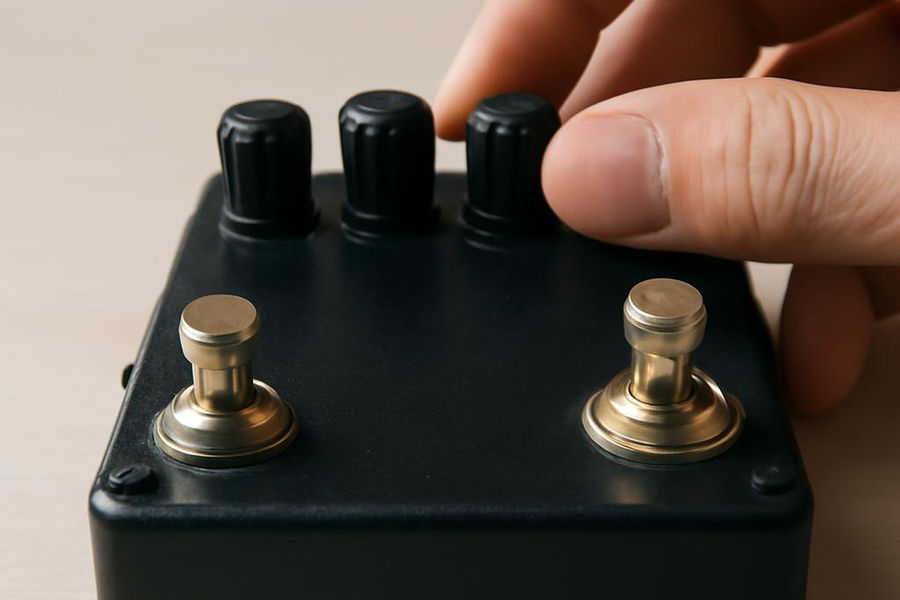
You can spot problems fast if you know where to look. A quick walk-through saves time and money.
Why this matters at a pawnshop or sale
Used pedals can sound great. They can also fail fast. You buy what you hear and what still works. That affects price and trouble later.
What to inspect first
Look at the box and the jacks. Bent jacks or missing screws are a red flag. Check the power input and battery door. If the pedal uses a battery, make sure it opens and closes cleanly.
Basic sound and function checks
Plug the pedal into your amp and your guitar. Set all knobs to noon. Tap the footswitch. You should hear the effect come in and go out cleanly. If the pedal has multiple modes, try each one. Listen for crackling when you turn knobs. A bit of dust can cause noise, but heavy crackle often means dirty pots or worn components.
The five-minute hands-on checklist
Test the footswitch repeatedly; it must click and change the sound every time.
Turn every knob from minimum to maximum; listen for scratchy noise or sudden jumps.
Move the input/output jacks and wiggle the plug to check for loose connections.
Use the power jack with a supply like the one the pedal needs; check current draw if possible. Battery-only pedals should have a clean compartment.
Inspect the enclosure for rust, dents, and smell; heavy corrosion or damp odor is a serious risk.
Check for mod stickers, replaced parts, or extra solder on the pcb if the back is open.
Ask the seller how it was used and if it was gigged often or left on a board.
Micro-moment
You plug the pedal in. You hit the switch and the effect is there, but the tone wavers when you nudge a knob. That little moment tells you the pots likely need cleaning or replacement. If the seller lets you try a few cables and the issue stays, it's an internal wear problem, not just a bad lead.
Power and electronics you can test without tools
If you have a simple multimeter, check the power jack for correct voltage and polarity. If you don't, borrow a standard pedal supply and try it. Watch for heat: a pedal that gets hot quickly can have a bad regulator or short. Smell for burned electronics when you power up — that is a clear reject.
Cosmetic issues and what they say about care
Light scratches are normal. Deep rust, crusted dirt inside jacks, or a mangled case suggest the pedal lived on the floor or in damp conditions. That usually means more service is coming. Replacement switches and jacks add cost and time. If the price reflects these flaws, it might still be worth buying for parts or a project.
Negotiation levers when you find problems
If a pot crackles, ask for a lower price for a parts tune-up. If a battery compartment is corroded, estimate the cost of a replacement and deduct it. If the pedal works but has cosmetic scars, use those as bargaining points if you plan to resell.
When to walk away
Walk away if the seller refuses any test, or if the pedal smells of mildew or burnt electronics. Also skip pedals with intermittent behavior you can reproduce; intermittent faults get worse.
Quick prep for pickup or shipping
Bring a short instrument cable and a pedal power supply. Bring a small screwdriver if the seller allows opening the back. If shipping, ask the seller to pack the pedal in bubble wrap and a sturdy box. Insure the parcel if the pedal is worth replacing.
Bottom line
You don't need to be a tech to buy a used pedal. You need a plan and a short test routine. Check power, switches, knobs, jacks, and the sound. Use the checklist and the negotiation tips to make a smart buy.
A straight neck and even frets matter more than shiny hardware — price the setup before you fall for the look.
Today’s takeaway: Test everything like you will use it on stage and refuse pedals with repeatable intermittent faults.


Comments