
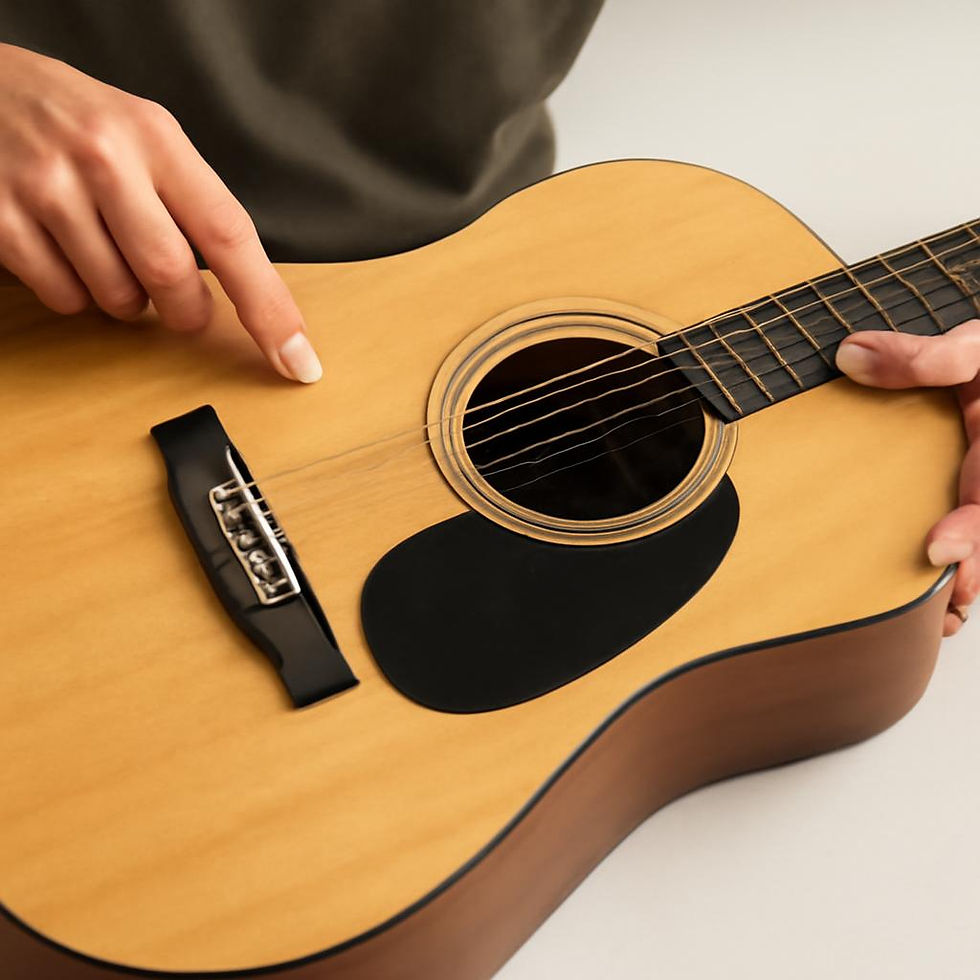
What to check before buying a used acoustic guitar
You picked up a guitar that looks fine at a glance. A quick miss can cost you days of repair or months of regret.

Myth vs fact: A scratch is cosmetic only
Myth: Small dings and scratches don’t matter.
Fact: Surface marks may hide bigger problems. A deep ding near the bridge or neck joint can mean a cracked top or loose glue. Light finish wear is mostly cosmetic. But investigate any damage near structural points.
Myth vs fact: New strings prove the guitar is healthy
Myth: New strings mean the guitar has been well kept.
Fact: New strings are often a quick fix to improve sound for a sale. They hide fret wear and fret buzz. Look under the strings at the frets and fretboard edges. Fresh strings alone don’t tell you about humidity, neck relief, or internal cracks.
Myth vs fact: A straight neck is perfect
Myth: If the neck looks straight, it’s fine.
Fact: Neck shape matters, but you need to check relief (a tiny forward curve). A perfectly straight neck can still have buzzing if the action is too low. Also check the truss rod (the metal adjuster inside the neck). If it’s already turned all the way, you can’t fix certain problems without a luthier.
Myth vs fact: Brand or age guarantees tone
Myth: A known maker or old age means the guitar sounds great.
Fact: Tone depends on wood condition, setup, and repairs, not just label or year. A cheap guitar with a good setup can sound better than an old name-brand that sat in poor conditions. Play and listen closely to judge tone.
Myth vs fact: Electronics on an acoustic are easy to replace
Myth: Onboard pickups and preamps are cheap and quick to swap.
Fact: Some electronics are easy to replace. Others mean taking the guitar apart. Cut or poor wiring can hide more damage inside. Test the electronics and ask how long they’ve worked and if any repairs were done.
You meet the seller in a quiet room and tune the guitar. The tone sounds good at first. Then you play higher up the neck and hear a buzz that disappears when you press harder. That small test tells you a lot about the setup and fret wear.
Fast check before you pay
Look down the neck from the headstock to the body for a smooth curve and no gaps where the neck meets the body.
Press each fret at the third string below the one you’re checking to reveal buzzing and dead spots.
Check the bridge area for cracks, lifting, or glue squeeze-out that indicates previous fixes.
Tap the top and sides lightly to hear for dead spots or dull sound (use your knuckle, not a pick).
Inspect the inside through the soundhole for loose braces, cracks, or labels from past repairs.
Test the action height near the 12th fret; too high or too low both cause problems.
Plug in and listen for hum, crackle, or uneven volume from electronics.
How to negotiate or walk away
If a guitar needs a simple setup—new strings, a truss-rod tweak, a saddle shave—ask for a lower price that covers those costs. If you find open cracks, severe fret wear, or a stuck truss rod, be ready to walk. Repairs for structural issues add up fast.
Where to get help if you’re unsure
If you like the guitar but you’re not confident in your check, offer to meet at a local shop or bring a friend who knows guitars. A quick paid setup estimate from a tech is often worth the peace of mind.
A straight neck and even frets matter more than shiny hardware — price the setup before you fall for the look.
Today’s takeaway: A quick, structured check of neck, frets, bridge, and electronics saves you repair bills and buyer's remorse.


Comments